
Stratasys–Bambu Lab: $27.6 Million Jury Verdict
The September 17 US jury verdict concerns four patents. We examine what 3D-printing technologies the claims actually cover and what the verdict may mean for Bambu Lab and the desktop FDM market.
What happened?
A jury in the US District Court for the Eastern District of Texas sided with Stratasys in the first patent trial against four Bambu Lab-related companies. The jury found infringement of US 9,168,698, US 10,556,381, US 9,421,713 and US 7,555,357, and found the infringement willful. The award for past use was approximately $27.6 million.
This is a jury verdict rather than the final end of every aspect of the dispute. The court's final judgment, post-trial motions and an appeal may still affect the remedies. Bambu Lab has stated that it intends to pursue the available post-trial and appellate procedures.
What do the patents actually cover?
A patent's title or abstract does not precisely define the boundary of protection. That boundary is set by the claims: as a general rule, an accused implementation must satisfy every required element of a particular claim for infringement of that claim.
US 9,168,698 – force detection during printing
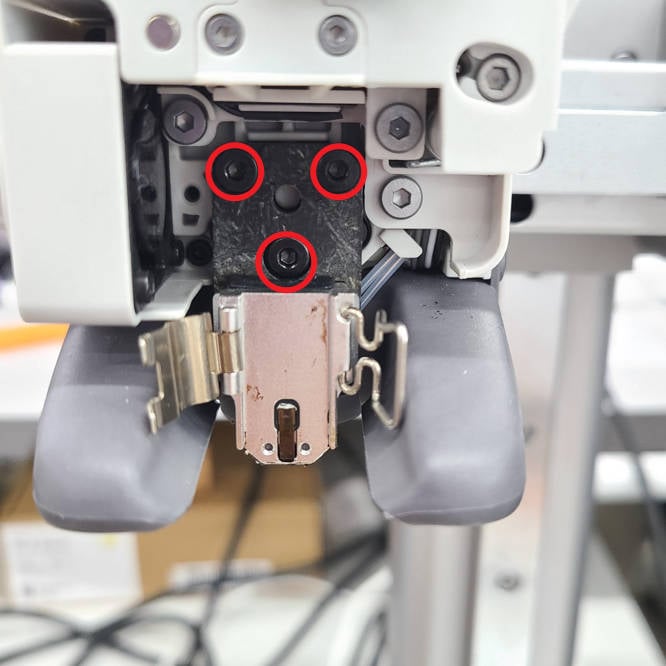
The patent titled “Three-dimensional printer with force detection” claims a method in which one or more sensors mechanically coupled to the fabrication tool measure contact force between the tool and a separate structure, such as the build platform or the object being printed. The measured force is then used to control at least one printer component while material is being deposited.
Dependent claims address changes to material feed rate, the Z-distance between nozzle and platform, comparisons between current and expected force, error detection and termination of the build. The disclosed sensor options include strain gauges and piezoelectric, capacitive, optical or electromagnetic sensors.
The patent is therefore not simply a patent on “probing the bed with the nozzle.” An important limitation of the main method claim is the use of force feedback to control the machine while material is being deposited.
US 10,556,381 – an extruder, force sensor and controller combination
This patent is a continuation in the same family and relies on the same October 29, 2012 priority date. The main difference lies in claim format: where the ’698 patent mainly claims an operating method, the ’381 patent focuses on the printer apparatus.
Its first claim requires an extruder, one or more sensors mechanically coupled to that extruder, and a controller that receives the sensor signal and calculates the contact force between the extruder and a separate structure. Further claims address multi-axis force sensing and force-based adjustment of feed rate, Z position, movement speed or extruder temperature. The two related patents therefore approach the same underlying concept from different directions: method claims and machine claims.
US 9,421,713 – a purge tower used when switching heads or deposition lines
The patent titled “Additive manufacturing method for printing three-dimensional parts with purge towers” does not simply claim every waste or prime tower printed next to a model. Its main claim combines multiple print heads or deposition lines, switching them between standby and operating modes, and printing a purge tower layer by layer from the head or deposition line that has been brought into operation.
Dependent claims address alternating part and support materials, a tower whose cross-sectional area decreases with height, stopping the tower after the final required material change, and using the tower as a nozzle-wiping structure. The infringement question is therefore not merely whether a slicer produces a tower, but whether the implementation contains every limitation of an asserted claim.
US 7,555,357 – adaptive filling of narrow voids
The oldest patent in the group addresses voids left between extrusion paths when those spaces are narrower than the normal road-width resolution used by the slicer. The claimed process identifies a void, determines its local dimensions using one or more intermediate raster paths, and generates a separate “remnant path” whose deposition rates vary according to the local width of the void.
The objective is to reduce porosity and improve the strength and sealing properties of the printed part. The idea resembles an ancestor of modern gap-fill and variable-line-width algorithms, but the patent does not cover every possible form of gap filling: the claimed path-generation and variable-deposition-rate elements matter.
Why does this group of patents matter?
Together, the four patents touch three technologies that now appear routine: nozzle or toolhead force detection, purge towers for multi-material printing, and slicer-based gap filling. That does not mean Stratasys broadly “owns” all of these functions. Each patent protects a defined combination of elements, and the US verdict concerns the accused Bambu implementations and the claims actually presented to the jury.
What is happening in Europe and before the PTAB?
The European family member of the purge-tower patent is EP2964450. On April 24, 2026, the Hague Local Division of the Unified Patent Court declined to order provisional measures against Bambu Lab's H2C. At that preliminary stage, the court was not sufficiently persuaded that the examined H2C implementation fell within the scope of the European claim. This does not automatically determine the US case because the patent claims, accused products and legal standards are not identical.
At the US Patent Trial and Appeal Board, Bambu did not establish that the challenged claims of US 9,421,713 were unpatentable. Bambu has appealed that PTAB decision to the US Court of Appeals for the Federal Circuit. The PTAB reached outcomes favorable to Bambu on other Stratasys patents from the wider dispute, but those patents were not among the four submitted to the jury in this verdict.
What does the verdict not mean?
- It is not an automatic, immediate US or European sales ban.
- It does not automatically make every purge tower, nozzle-probing system or gap-fill algorithm infringing.
- It does not end Bambu's post-trial and appellate options.
- It does not by itself define the scope of related patents in Europe or other jurisdictions.
The $27.6 million award concerns past damages. Public reporting has not yet shown how the amount was allocated among the four patents, individual Bambu products or the defendant companies, or whether Stratasys will seek an injunction or an ongoing royalty.
Patent terms and what comes next
According to the current public US records, the adjusted expiration dates are March 3, 2027 for US 7,555,357; February 7, 2034 for US 9,168,698; August 20, 2034 for US 9,421,713; and July 27, 2036 for US 10,556,381. Expiration does not erase potential damages for infringement alleged to have occurred while a patent was in force.
The next major steps may include the court's final judgment, any enhancement of damages or ongoing royalty, post-trial motions and the appeal announced by Bambu Lab. A second US patent case between Stratasys and Bambu also remains pending.
Primary documents and further sources
- US 9,168,698 – Three-dimensional printer with force detection
- US 10,556,381 – Three-dimensional printer with force detection
- US 9,421,713 – Additive manufacturing method for printing three-dimensional parts with purge towers
- US 7,555,357 – Method for building three-dimensional objects with extrusion-based layered deposition systems
- Bloomberg Law – jury verdict report
- 3D Printing Industry – procedural background and Bambu's response
This article is a technical and informational overview and does not constitute legal advice.